What Does It Really Mean to Be an Entrepreneur?
“Entrepreneur” is one of those words that gets used a lot… and understood very little. For some, it brings to mind fast growth, multiple businesses, big risks, and constant change. For others, it feels like a label that does not quite fit. “I’m not an entrepreneur… I’m just a business owner.” But what if those two things are not as different as we think?
The misconception of what an entrepreneur looks like
There is a common belief that entrepreneurs are people who are always starting something new. People who jump from one idea to the next, constantly evolving and reinventing.
And while that can be true for some, it is not the full picture.
Many business owners have a clear idea of what they want to build. They focus, they refine, and they grow something steadily over time. They may not feel like they fit the “entrepreneur” mould, simply because they are not chasing constant change.
But entrepreneurship is not defined by how many businesses you start.
It is defined by the way you think about opportunity.
Freedom sits at the heart of entrepreneurship
At its core, entrepreneurship is about choice. It is about having the freedom to decide:
What you build
How you build it
And how your business fits into your life
Often, people talk about financial freedom or time freedom as the goal. But those are outcomes. The deeper driver is the ability to shape your work around what matters to you.
For some, that might mean growing a business to scale. For others, it might mean creating something sustainable that supports a certain lifestyle.
Neither is more “entrepreneurial” than the other.
The role of evolution and curiosity
One of the defining characteristics of entrepreneurship is curiosity. What happens if I try this? Where could this go next? Is there another way of doing this? This does not always mean abandoning one business for another. Sometimes it means expanding, diversifying, or exploring new directions within what you already have.
You might develop new services.
You might create something that sits alongside your existing work.
You might even realise that something no longer fits, and choose to take a different direction.
None of this means you have failed. It means you are paying attention.
When change feels like failure (but isn’t)
One of the biggest barriers for business owners is the fear of being judged when they change direction. If I do something different, will people think I’ve failed? If I move away from what I originally said I did, will it confuse people? These questions can keep people stuck.
But in reality, adapting your business is often a sign of growth, not failure. As you gain experience, your understanding deepens. What made sense at the beginning may no longer fit in the same way. Entrepreneurship allows for that flexibility. You are not required to stay the same.
The importance of defining your own boundaries
When you work for someone else, your role is usually defined for you. There are expectations, responsibilities, and limits that are set externally. As an entrepreneur, those boundaries shift. You define them.
This can feel liberating, but also challenging. Without clear boundaries, it is easy to overextend yourself or feel like you need to do everything. But the reality is, the only limits in your business are the ones you set… or the ones you accept without questioning.
Learning through trial, error, and resilience
Entrepreneurship is often described as taking risks. But more accurately, it is about learning through action. Not everything will work. Some ideas will fail. Others will evolve into something unexpected. The key difference is not whether things go wrong. It is how you respond when they do.
There is a concept often described as “bounce back ability”. The ability to keep going, to adapt, and to try again, even when something has not worked the first time. Every step, whether it succeeds or not, adds to your understanding.
So, what does it really mean to be an entrepreneur?
It is not about fitting a specific label. It is about:
Being willing to explore possibilities
Making decisions based on what matters to you
Adapting as you learn
And continuing, even when the path is not clear
There is no single version of entrepreneurship. There is only your version.
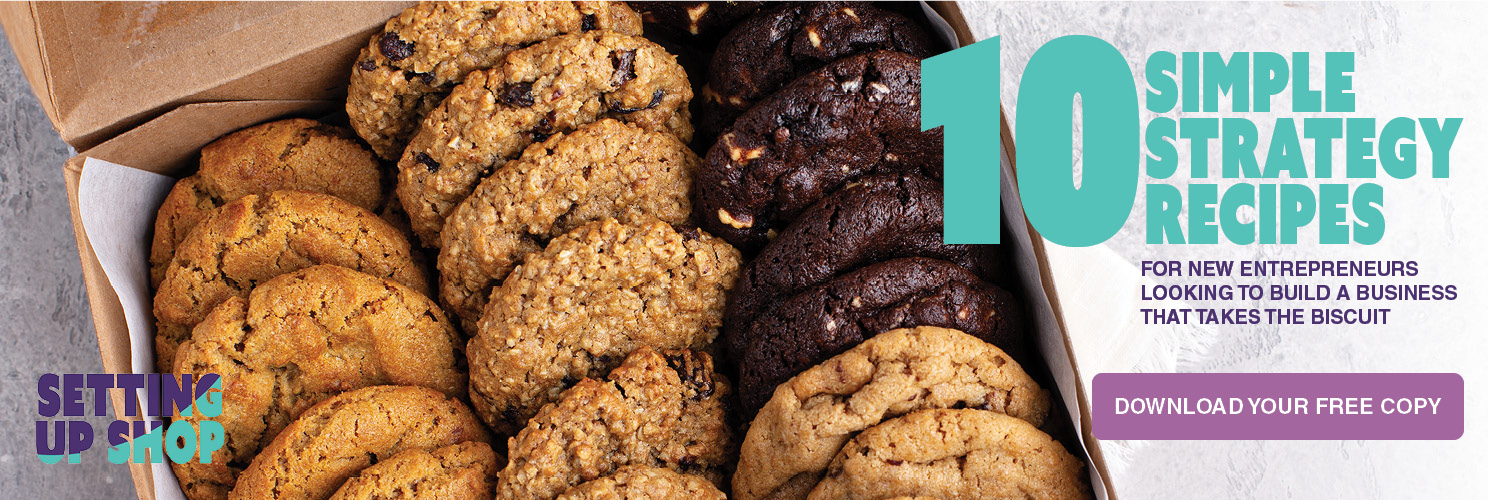
Finding your own recipe
Building a business is not about following someone else’s exact blueprint. It is about understanding your strengths, your interests, and your goals… and creating something that works for you.
That might look different from what you expected at the start. And that is not only okay. It is often necessary.
Because success is not about copying someone else’s path.
It is about finding your own recipe.